Uncategorised
A continuación se muestran fotografías de arquitectura de Estados Unidos de 1870 correspondientes todas ellas a las "Albert Levy's architectural photographic series of modern american architecture"
Las albuminas tienen un tamaño de 19x24 cm., lleva un número del negativo impreso en la imagen.
Las fotos se encuentran pegadas a cartulina azulada donde figura el sello seco, blinstamp, de Albert Levy, utilizado únicamente en estas series.
Albert Levy realizó, al menos, 36 series sobre la arquitectura americana que se encuentran en los mas importantes museos americanos y canadienses. Se puede citar, entre ellos, el Metropolitan, Getty Museum, Chicago Art Institute, Avery Library, Library of Congress y el Centre Canadien d'Architecture.-
Las fotografías se realizaron en los años 1870-1885 en las ciudades de la costa este de USA como Nueva York, Boston, Albany asi como otras importantes Chicago, Philadelphia etc.
Los edificios fueron realizados por los mejores arquitectos del momento constituyendo asi un mosaico tenporal de la arquitectura americana de gran importancia dado que llega a abarcar mas de 600 fotografías e incluye tanto edificios públicos como Ayuntamientos o Iglesias como mansiones de los nuevos magnates americanos como Vanderbilt
Las series recogen, habitualmente, los edificios realizados en ese momento.
|
PHOTOS |
NOTES |
 |
Albert Levy Architectural Decorative Books New York, 77 University Place. Sello seco de Albert Levy utilizado en las series de Arquitectura Americana. c.1870 |
 |
Albert Levy c. 1870 Standard Oil Block. Ohio. Cleveland. Enciclopedia of Cleveland https://case.edu/ech/articles/b/bp-america Rockefeller and his associates successfully stabilized the chaotic new oil industry by combining refineries and centralizing management. Standard Oil controlled 21 of Cleveland's 26 refineries by 1872, as well as major refineries in New York, Philadelphia, and Pittsburgh. Ten years later the company controlled 90% of the nation's refining capacity. In order to circumvent the company's Ohio charter, which prohibited company activity outside the state, a Standard Oil trust agreement was drawn up in Jan. 1882 giving 9 trustees all the stock of its 40 companies, including Ohio Standard. A successful lawsuit by the State of Ohio in 1892 forced dissolution of the trust in Ohio and prompted the 1899 reorganization of Standard Oil (New Jersey) as a holding company to receive the stocks previously held by the trustees. In 1911 the U.S. Supreme Court declared the holding company a monopoly in violation of the Sherman Antitrust Act and ordered it disbanded. As a result, Standard Oil of Ohio became an independent company which controlled marketing operations in Ohio and owned an outmoded Cleveland refinery, but had no crude oil reserves and no pipelines. By that time, Ohio Standard had moved its offices from the Standard Block to a new building on E. 55th St. |
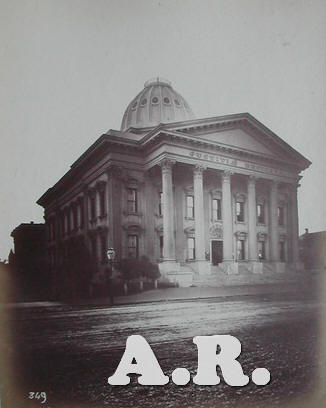 |
Albert Levy. c. 1870 Santa Clara county courhouse San Jose was chosen as the initial site for the state's capitol in 1849, which it held until 1851, when legislators voted to move to Vallejo. After Santa Clara County was formed on April 25, 1851, a contest was held to select a design for a new building worthy of being a state capitol in 1860. The winning entry, designed by Levi Goodrich, was constructed from 1866 to 1868 at a cost of US$173,737.96 (equivalent to $3,820,000 in 2022).
Santa Clara county courthouse
Santa Clara County Courthouse https://www.cschs.org/history/california-county-courthouses-alphabetical/santa-clara-county/ Completed 1868 During California's first 15 years of statehood, Santa Clara had no fewer than five courthouses, beginning with an adobe juzgado, or Mexican courthouse, and ending with this Roman Corinthian landmark on St. James Park. The building withstood numerous earthquakes and fires, including a disastrous blaze in 1931 that gutted the building. Damage sustained in the 1989 Loma Prieta earthquake nearly led to its demolition, but after a $12.4 million seismic retrofit and restoration project the building was reopened in 1994 and is still in use today.
|
 |
Albert Levy c. 1870 Kansas City. Jackson count courthouse. Dstruida por un tornado en 1886 As the sky became densely clouded, the Jackson County Courthouse at 2nd and Main was business as usual. The building was originally constructed as the Nelson Hotel. Forming somewhere over the south bank of the Missouri River, the swirling storm quickly transformed into a full-blown tornado. So much water was collected from the river that some at the time called this event "a hurricane."
Without much warning, the tornado made it onto land and into a direct path toward the courthouse. The Kansas City Star reported, "The force of the wind seemed to be confined to a limited district, and it sought, with almost human intelligence, the weakest buildings for its work of death." Because the building wasn't built as a government building, it was said that many beams and supporting structures were removed to make for larger spaces. The courthouse was no match for the winds that barreled through at 2nd and Main. Within seconds, the top two floors of the courthouse were blown into unrecognizable pieces. Two victims were claimed in its fury: deputy sheriff Henry Dougherty and deputy recorder William Hedges. Ironically trapped within the basement were five prisoners held in the courthouse. All escaped the wreckage and all but one returned later that night. Amazed at their survival and honesty, Kansas Citians brought cigars and fruit to them to congratulate them for their escape and return. Thousands of residents visited the wrecked building and to get a glimpse of what this powerful tornado had torn through in her glory. The courthouse had $10,000 in "cyclone insurance" that was used to build their next courthouse at 5th and Oak in 1892.
|
 |
Albert Levy. c. 1870 Oshkash Fire Departement. Construida en 1871 como Phoenix Fire House. Destruida por las llamas en 1874
Oshkash Fire Departement construida en 1871 como Phoenix Fire House destruida por las llamas en 1874 n 274
The Brooklyn Steam Fire Engine Company Number 4 was organized in Oshkosh, WI on October 3, 1867. The construction of a building was authorized that same year. On January 2, 1868 a steam engine was purchased for the company. William Waters was contracted for the design, which was a two-story brick building with a bell tower and was constructed by L. G. Alger and G. C. Fitzsimmons in 1868. The structure was built in the Italian Revival Style. An addition to the east side of the building was also designed by Waters and built by Alger in 1879, and was occupied by the Union Hook and Ladder Company. The building was in use until 1949. It was added to the National Register of Historic Buildings in 1969 and is located at 17 West Sixth Street. |
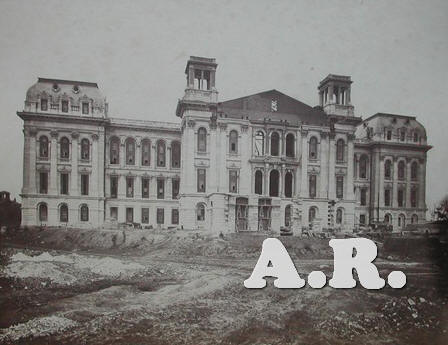 |
Albert Levy . c. 1870 Illinois State Capitol The Illinois State Capitol, located in Springfield, Illinois, houses the legislative and executive branches of the government of the U.S. state of Illinois. The current building is the sixth to serve as the capitol building since Illinois was admitted to the United States in 1818. Built in the architectural styles of the French Renaissance and Italianate, it was designed by Cochrane and Garnsey, an architecture and design firm based in Chicago. Ground was broken for the new capitol on March 11, 1868, and the building was completed twenty years later for a total cost of $4.5 million. Blog:Vintage photo. Illinois State Capitol Srpringfield HLL. Photographer Albert Levy |
 |
Albert Levy. c. 1870 Missouri. The Capitol St. Louis courhouse
The Old St. Louis County Courthouse was built as a combination federal and state courthouse in St. Louis, Missouri, United States. Missouri's tallest habitable building from 1864 to 1894, it is now part of Gateway Arch National Park and operated by the National Park Service for historical exhibits and events. .............. A new courthouse was soon needed. In 1839, ground was broken on a courthouse designed by Henry Singleton in the Greek Revival style, with four wings, including an east wing that comprised the original courthouse and a three-story cupola dome at the center. In 1851, Robert S. Mitchell began a redesign of the courthouse in which the east wing was torn down and replaced. From 1855 to 1858, the west wing was remodeled. The famous Dred Scott citizenship case was heard in the west wing before the remodeling. Interior dome of the Old CourthouseIn 1861, William Rumbold replaced the cupola with an Italian Renaissance cast iron dome modeled on St. Peter's Basilica in Vatican City. The United States Capitol dome, built at the same time during the American Civil War, is also modeled on the basilica. The St. Louis dome was completed in 1864, and Karl Ferdinand Wimar was commissioned to paint murals, which are featured in the rotunda |
 |
Albert Levy. c. 1870 Hillhouse high school. Newhaven. Connecticut Architect Robert Treat Merwin ( A Guide to Historic New Haven, Connecticut) Established in 1859 as New Haven High School, Hillhouse High School is New Haven's oldest public high school. Originally located on Orange Street, it adopted its nickname, "The Academics," in acknowledgment of its close association with Yale University.
In 1863, the school was moved to a building at Orange and Wall Streets, which was replaced in 1871 by a new school.
The school is named in honor of James Hillhouse of New Haven, who represented Connecticut in the U.S. Congress in the early years of the United States' existence as a nation, serving as both a Representative and a Senator.
|
 |
Albert Levy c. 1870 City Hall Newhaven. Connecticut The New Haven City Hall and County Courthouse is located at 161 Church Street in the Downtown section of New Haven, Connecticut. The city hall building, designed by Henry Austin, was built in 1861; the old courthouse building, now an annex, designed by David R. Brown, was built in 1871–73. They stand on the east side of the New Haven Green. The pair of buildings was listed on the U.S. National Register of Historic Places in 1975. They are significant early examples of High Victorian Gothic architecture in the United States. |
 |
Albert Levy c. 1870 Baptist Church Newhaven. Connecticut History of the First Baptist Church in New Haven : historical address delivered at the centenary celebration, the eleventh day of October, nineteen hundred and sixteen
|
 |
Albert Levy. c. 1870 Yale National Bank Newhaven. Connecticut The Yale National Bank Of New Haven |
Muchas veces nos encontramos en el comercio fotografías antiguas cuyo autor es desconocido pero que, sin embargo, son de gran belleza y calidad.
En algunas de ellas se identifica el lugar o la persona retratada pero no aparece el autor.
Puede ser que nos encontremos con los primeros grandes aficionados a la fotografía, verdaderos artistas, que no solo hicieron fotos para su uso personal.
En cualquier caso este apartado incluye algunos ejemplos de estas fotos como homenaje a esos fotógrafos desconocidos pero que nos documentan, muchas veces, el aspecto más íntimo de la vida.
Dentro de este apartado quiero comentar algunas fotos:
-
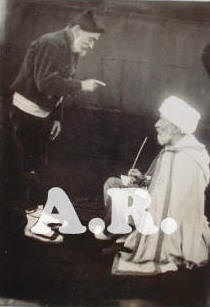
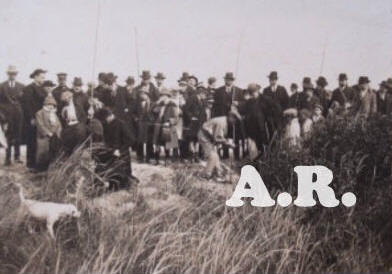
Fotógrafo desconocido Cazador. Foto realizada hacia los años 1920 y en la cual el fotógrafo ha conseguido una imponente imagen, el joven transmite tranquilidad y seguridad en si mismo.
-
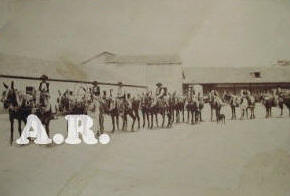
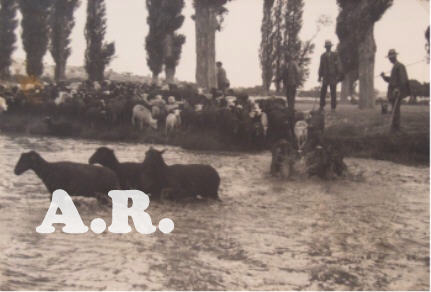
Retahíla de mulas. Foto que tiene un cierto misterio para mí. La he enseñado a diferentes coleccionistas y ni siquiera coinciden en el lugar pues unos me indican España y otros me señalan América del Sur. Posteriormente, por casualidad, he identificado el lugar: Finca La Acequilla en Guadalajara
-
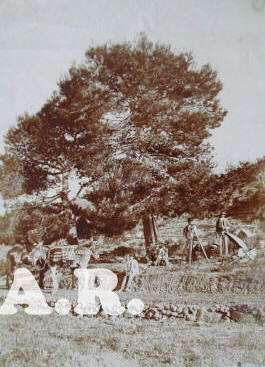
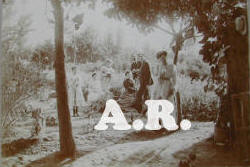
Fotografía antigua, albúmina, de unos topógrafos descansando debajo de un árbol. Es una de las fotos más bellas de mi colección y, posiblemente, una de las fotos españolas más antiguas que poseo pues dado el papel utilizado y la vestimenta de los personajes se aproximen su realización a 1860/65.
EN
We often come across old photographs in stores whose author is unknown but which are nevertheless of great beauty and quality.
In some cases, the place or the person portrayed is identified, but the author is not mentioned. We may encounter the first great photography enthusiasts, true artists, who did not just take photos for their personal use.
This section includes some examples of these photos as a tribute to those unknown photographers who often document the most intimate aspects of life.
Within this section, I would like to comment on some photos:
Unknown Photographer: Hunter. Photo taken around the 1920s, in which the photographer has captured an impressive image. The young man conveys tranquility and self-confidence.
A String of Mules. A photo that holds a certain mystery for me. I have shown it to different collectors, and they don't even agree on the location, as some point to Spain and others to South America. Later, by chance, I identified the location: Finca La Acequilla in Guadalajara.
Old albumen photograph of surveyors resting under a tree. It's one of the most beautiful photos in my collection and possibly one of the oldest Spanish paper photographs I own, given the paper used and the clothing of the subjects. It was taken around 1860/65.







La fotografía en sus primeros momentos de desarrollo era una actividad cara, solo las clases adineradas pueden acceder a su posesión.
A partir del invento de Disderi del formato Carta de vista de 9x6 cm. abarata mucho su costo y la foto se acerca a las clases populares.
En 1880 aparece el formato carta de gabinete de 14x10 cm., una versión del anterior de mayor precio y calidad.
Los estudios fotográficos comienzan a formar parte de la fisonomía de las ciudades. Estos estudios suelen ocupar el último piso de los edificios para aprovechar al máximo la luz natural. En estos estudios trabajan habitualmente gran número de operarios que intervienen en todas las fases de la producción fotográfica, incluida el revelado y la encuadernación o presentación de las fotos de manera más o menos lujosa. El retoque es, en algunos casos, el detalle final.
Se comienza entonces también a retratar a nobles y a representantes de la realeza que, de esta manera, son conocidos tal cual eran físicamente por el pueblo llano. Empiezan las colecciones , por parte de la gente, de retratos de nobles, actores que, de esta manera , se democratizan entrando hasta los mismos álbumes familiares.
Estos retratos de estudio se realizan con un telones de fondo para cambiar la foto. Muchas veces una silla o una maceta alta sirven de punto de apoyo. Curiosamente la presencia o no de uno de estos elementos ayuda muchas veces a datar con mayor exactitud la foto.
Los archivos de algunos de estos fotógrafos, especialmente de grandes estudios, son adquiridos a los herederos por el Estado o llegan también mediante donación.
Ahora bien mucha, muchisima, de esta fotografía se tiró a la basura. Solamente en los últimos decenios se vio su labor y se empezó a conservar y, al mismo tiempo, se extendió su coleccionismo
Aquí podemos ver, por ejemplo, fotografías antiguas de:
-
Cartas de gabinete, retrato de dama, de Pau Audouard. Famoso fotógrafo afincado en Barcelona.
-
Fotografía antigua de boda realizada por Alfonso en los lujosos salones de su estudio.
-
Fotografías antiguas, cartas de gabinete, realizadas por Audouard de artistas.
-
Fotografías antiguas, sobre cartulina delgada y decorada, de niños disfrazados de Calvache.
-
Albúminas sobre cartulina gruesa, decorada al dorso con datos de su estudio, de Rafael Garzón de la época en que tenia su estudio dentro del Palacio de la Alhambra.
-
Fotografías antiguas de Kaulak (Antonio Canovas del Castillo) con el repetido tema de niños disfrazados de carnaval como era costumbre en la época.
-
Foto de Santiago Rusiñol en Cau Ferrat, una de las más conocidas imágenes de este pintor, del archivo Mas
En:
|
PHOTOS |
NOTES |
 |
Fotógrafo Alfonso
1929. Fotografía de boda en el estudio.
|
 |
Fotógrafo Audouard
c 1900 Dama |
 |
Fotógrafo Audouard
c.1890 Retrato familiar Fue uno de los mas celebres retratistas de la Barcelona de principios del siglo XX. Tenia su lujoso estudio en una casa del arquitecto Lleó Morera. Más info
|
 |
Fotógrafo Audouard
c. 1890 Artista de teatro
|
 |
Fotógrafo Calvache
c. 1910 Retrato Saga de fotógrafos formada por Diego Calvache (Jerez) y sus hijos Diego, Jose (Walken) y Antonio. El más conocido de ellos es Diego (hijo) que figura establecido en Madrid en 1911. Retrataron al mundo del espectáculo, especialmente el teatro. |
 |
Fotógrafo Calvache
c. 1890 Niño disfrazado Saga de fotógrafos formada por Diego Calvacha (Jerez) y sus hijos Diego, Jose (Walken) y Antonio. El más conocido de ellos es Diego (hijo) que figura establecido en Madrid en 1911. Retrataron especialmente al mundo del espectáculo, especialmente el teatro. |
 |
Fotógrafo Company
c. 1890 Retrato familiar
|
 |
Fotógrafo Rafael Garzón
1905 Retrato en La Alhambra |
 |
Fotógrafo Esplugas
c. 1890 Retrato de artista de teatro |
 |
Fotógrafo Franzen
c. 1910 Retrato de famillia
|
 |
Fotógrafo Rafael Garzón
1905 Retrato en el Patio de los Leones de La Alhambra Extraordinario retratista y reportero urbano que desarrollo su labor en Córdoba, Granada y Sevilla. En 1901 se afina en Sevilla donde su actividad se extendió hasta 1931. Más info. |
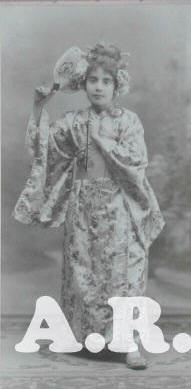 |
Fotógrafo Kaulak (Antonio Cánovas del Castillo)
c. 1900 Retrato de niña disfrazada
|
 |
Fotógrafo Kaulak
c. 1900 Retrato de niña disfrazada Fotos de Kaulak se pueden ver mediante busqueda en la web Cer. Es Red digital de las colecciones de Museos de España |
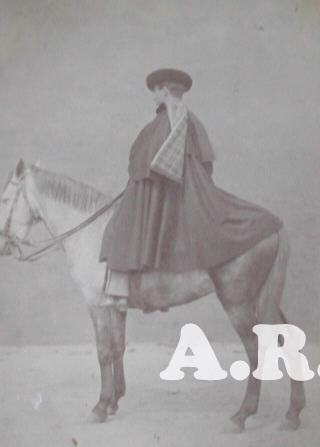 |
Fotógrafo Serra Payba
c. 1890 Jinete Sevilla Blog:Fotografia Antigua Sevilla. Fotógrafo Sierra Payba. Carte de visite. Actualización de datos |
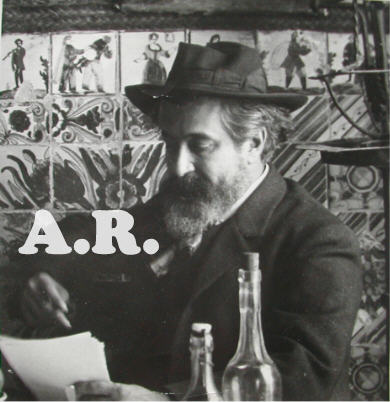 |
Santiago Rusiñol (Pintor y fundador del Museo Cau Ferrat).
Cau Ferrat. Foto Mas
|
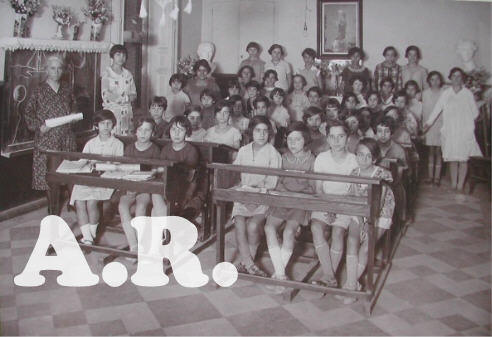
Las fotografías antiguas de escolares empiezan a ser habituales desde los primeros tiempos de la fotografía hasta nuestra época (entre los años 1950 y 1970 son muy habituales en España las fotos de los escolares sentados en el pupitre con el Mapa de España de fondo).
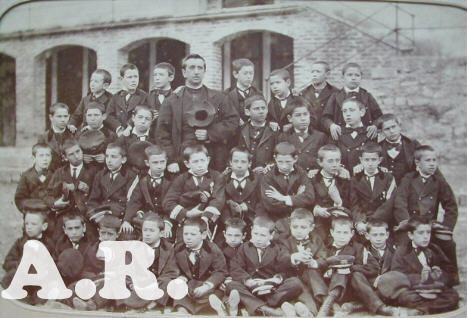
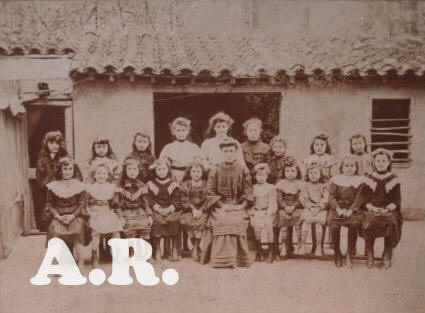
Aquí vemos diferentes albúminas correspondientes a finales del siglo XIX y principios del XX.
Merece la pena destacar en este apartado la labor de Jean David fotógrafo francés que viajo por España entre 1875 y 1895 realizando numerosas fotografías de escolares. Aquí podemos ver los dos tipos de pose o colocación de los escolares que utilizaba David, una pose frontal, con el profesor en la posición central y otra pose en la que el grupo esta desperdigado por un patio o jardín pero, en realidad, están posando perfectamente distribuidos.
Se incluyen al final unas fotos antiguas, pero claramente mas recientes pues pueden ser de 1940 o ligeramente posteriores que forman parte de un pequeño álbum que ilustra un colegio de señoritas, tanto mostrándonos sus clases como las alumnas efectuando deporte.
El autor de estas fotos es Palomeque de Madrid del cual solo he encontrado alguna cita sin dato biográfico alguno, tampoco he conseguido identificar el colegio.
EN
The old photographs of students are becoming common since the early days of photography to the present day (between 1950 and 1970 are very common in Spain photos of the students sitting at a desk with a background map of Spain).
Here we see different albumens for the late nineteenth and early twentieth centuries.
It is worth noting in this section the work of the French photographer Jean David who travelled all over Spain, specially in the North, between 1875 and 1895 and made numerous photographs of schoolchildren. Here we see the two types of possession or placement of the students who used David, a frontal pose, with the teacher in the central position and a posture in which the group is scattered by a yard or garden but in reality, are posing perfectly distributed.
Included at the end some old photos, but clearly they can be most recent in 1940 or slightly later as part of a small album that illustrates a school for young ladies, showing both her classes and the students making sport.
The author of these photos is Palomeque Madrid which I only found some biographical appointment without any, I have not managed to identify the school.
|
PHOTOS |
NOTES |
 |
Fotografía F. Pardo
Oviedo.Escolares delante de un hórreo. Blog:Fotógrafo Feliciano Pardo hijo. Fotografía antigua Oviedo |
 |
Fotógrafo desconocido
1921 Profesores y alumnos. Graciosa foto por la disposición de los sombreros en el suelo como parte de la composición. |
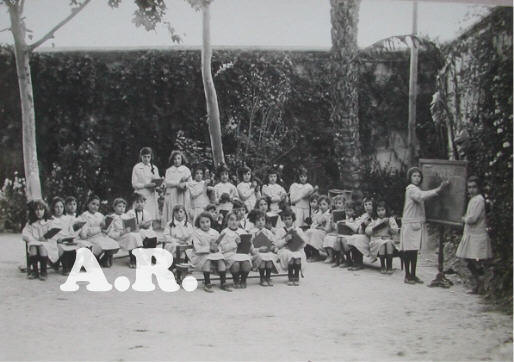 |
Foto Rebel
c.1920.Clase en el jardín. Murcia Blog:Fotografía Centro fotográfico Damián Rebel. Fotografía antigua Murcia. |
 |
Anónimo
c.1940 Clase con niñas |
 |
Anónimo
c.1920 Clases de piano en el jardín |
 |
Fotógrafo J. David
c.1880.Colegio de niñas
|
 |
Fotógrafo J. David
1879 Colegio de Orduña Fotógrafo francés que desarrolló una gran labor en España en los años 1880-1900. Destacar sus fotos de grupo de escolares y militares. Recorrió sobre todo la zona norte de España y Madrid |
 |
Fotógrafo desconocido
c.1900 Colegio de pintura |
 |
Fotógrafo Dámaso Fuertes
c.1890.Madrid Damaso Fuertes y Velez pionero de la fotografía de Teruel donde nació en 1849 y que luego tuvo estudio en Barcelona y en Madrid en la calle de Tetuan nº 20 |
 |
Fotógrafo desconocido
c.1900 Niñas en el patio del colegio |
 |
Fotógrafo desconocido
c.1900 Niñas en el patio del colegio |
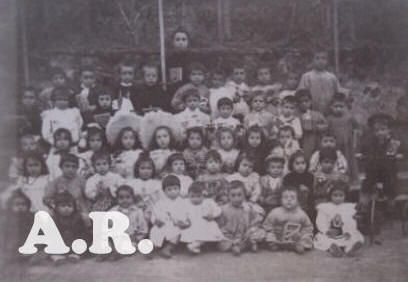 |
Foto Claudio
c.1910.Niños con juguetes.Santander Blog:Fotografía Claudio Santander. Colegio de niños y retrato de caballero.
|
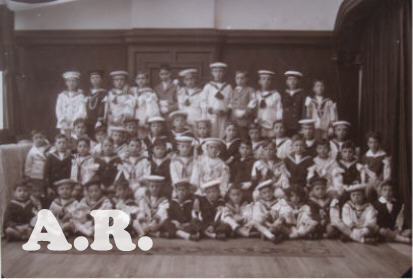 |
Fotógrafo desconocido
c.1920 Niños de marinero |
| Fotógrafo Palomeque
c.1940.Colegio de niñas desconocido (álbum) |
|
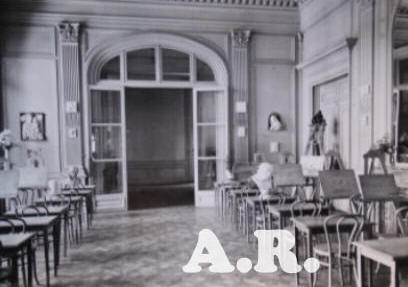 |
Fotógrafo Palomeque
c.1940 Colegio de niñas desconocido (álbum) |
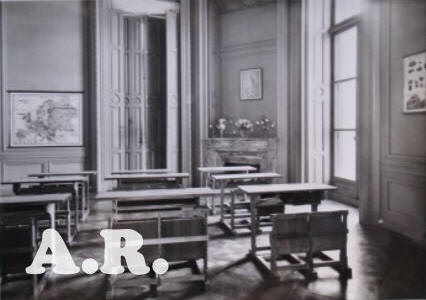 |
Fotógrafo Palomeque
c.1940 Colegio de niñas desconocido (álbum) |
 |
Fotógrafo Palomeque
c.1940 Colegio de niñas desconocido (álbum) |
 |
Fotógrafo Palomeque
c.1940 Colegio de niñas desconocido (álbum) |
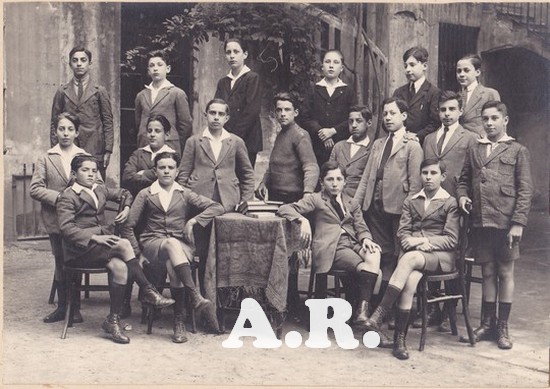 |
Fotógrafo L. de Olalde c.1920 Barcelona |
En el apartado de fotografía de grupos he separado estas que tienen que ver con el concepto del trabajo.
Recoge a diferentes profesionales en una parada de su labor posando para el fotógrafo.
Este tipo de fotografías tienen un valor documental de primera mano.
Curiosamente las fotos antiguas que yo he encontrado de este tipo no tienen, con frecuencia, el nombre de su autor, la excepción son las fotos de J. Oña que se pueden fechar en 1953 y que, sin embargo, con el tono sepia que tienen para imitar el estilo de fotos del primer tercio del siglo.
Mención especial , por curiosas como publicidad, las fotos de la tienda de Pianos Guarro, perteneciente a un álbum de tapas duras con 16 fotos.
La fotografía, sobre todo en las primeras décadas del siglo XX, va a documentar todo tipo de trabajo. El fotógrafo entra en las clases de la escuela de niños, en las fábricas, en los trabajos del hogar, en el campo. Nos va dejando un aporte documental de primera mano.
Algunos grandes fotógrafos del fotoperiodismo se dedicaron a este apartado de manera especial.
Pero no pocas veces las fotos son anónimas, de un autor que no quiere identificarse, pero que las hace con todo el cariño de la proximidad con el trabajo fotografiado.
Men at work in these vintage photographies.
| PHOTOS |
NOTES |
 |
Fotógrafo desconocido
c. 1920 Albañiles |
 |
Fotógrafo José de Hoyos
c.1890 Plaza de toros de Ronda. Blog:Fotografía antigua Plaza de Toros de Ronda. Fotógrafo Jose de Hoyos |
 |
Fotógrafo desconocido
c.1930 Profesor y su clase |
 |
Fotógrafo desconocido
c. 1920 Fábrica de chocolates |
 |
Fotógrafo desconocido
1925 Modas Paris Madrid |
 |
Fotografía Vicente
c. 1930 Oficina |
 |
Fotógrafo desconocido
c. 1930 Salón de peluquería. |
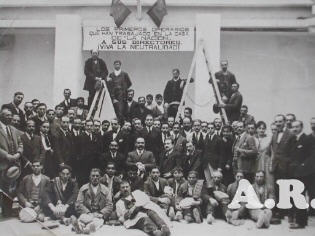 |
Fotógrafo Luis Marín
c. 1920.Personal del periódico La Nación. La Fundación Pablo Iglesias guarda gran parte de su archivo compuesto por 18.296 fotografías, legado familiar de Marín ;
|
 |
Fotógrafo desconocido c.1940 Planchadora |
 |
Fotógrafo Veronés
c. 1920 Toreros |
 |
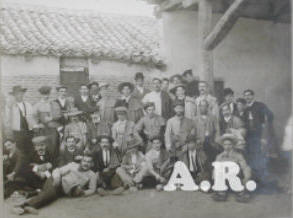
Desconocido
c.1900 Ferroviarios |
 |
Fotógrafo Ruiz Vernacci
c. 1910.Bocamina. Canfranc. |
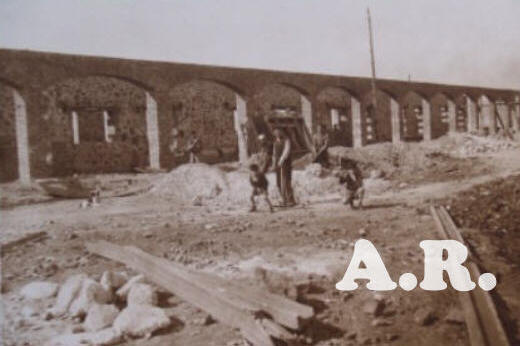 |
Fotógrafo J. Oña
1953.Construcción del Colegio de los Salesianos de Puertollano (Ciudad Real) Blog:Fotógrafo J.Oña. Puertollano. Fotografía antigua Ciudad Real |
| Fotógrafo J. Oña
1953 Construcción del Colegio de los Salesianos de Puertollano (Ciudad Real) |
|
 |
Foto Modelo
1910 Telegrafista |
 |
Fotógrafo desconocido
1910 Tienda de Pianos Guarro Fábrica de pianos Guarro en la revista de folklore(Fundación Joaquín Díaz) |
 |
Fotógrafo desconocido
1910 Tienda de Pianos Guarro Fábrica de pianos Guarro en la revista de folklore(Fundación Joaquín Díaz) |
| Fotógrafo desconocido
1910 Tienda de Pianos Guarro Fábrica de pianos Guarro en la revista de folklore(Fundación Joaquín Díaz) |
|
 |
Fotógrafo desconocido
1910 Tienda de Pianos Guarro Fábrica de pianos Guarro en la revista de folklore(Fundación Joaquín Díaz) |
 |
Fotógrafo desconocido
1910 Tienda de Pianos Guarro Fábrica de pianos Guarro en la revista de folklore(Fundación Joaquín Díaz) |
 |
Fotógrafo Amador
c. 1910.Oficina Seguros la Unión. Madrid. |
 |
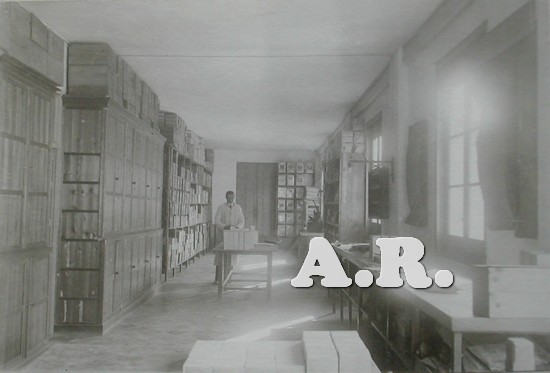
Fotógrafo Amador
c. 1940 Oficina Seguros la Unión. Madrid |
 |
Fotógrafo desconocido
c. 1900 Fábrica |
 |
Fotógrafo desconocido
c. 1900 Fábrica |
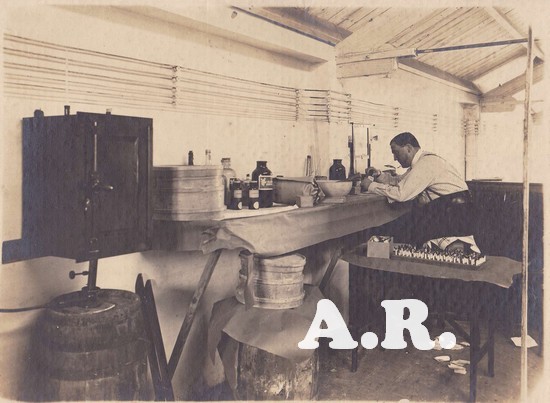 |
Fotógrafo desconocido c. 1920 Químico |
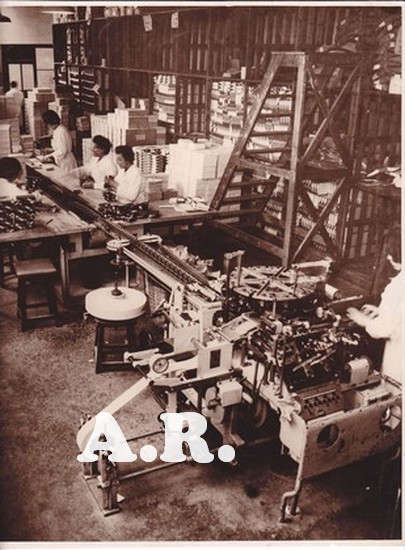 |
Fotografo Vicente Ibañez. c. 1955 Madrid. |
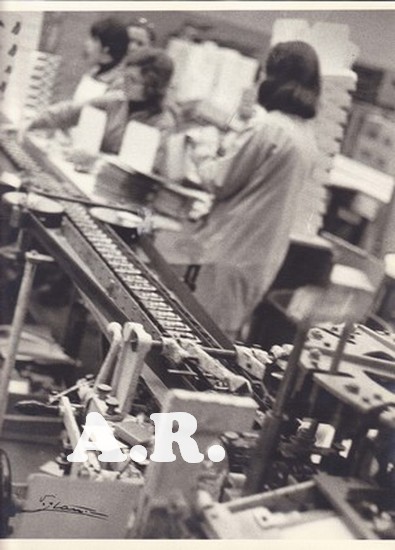 |
Fotografo Vicente Ibañez. c. 1955 Madrid. Fabrica de perfumería Myrurgia. Foto publicitaria |